
All Articles
Skip to content



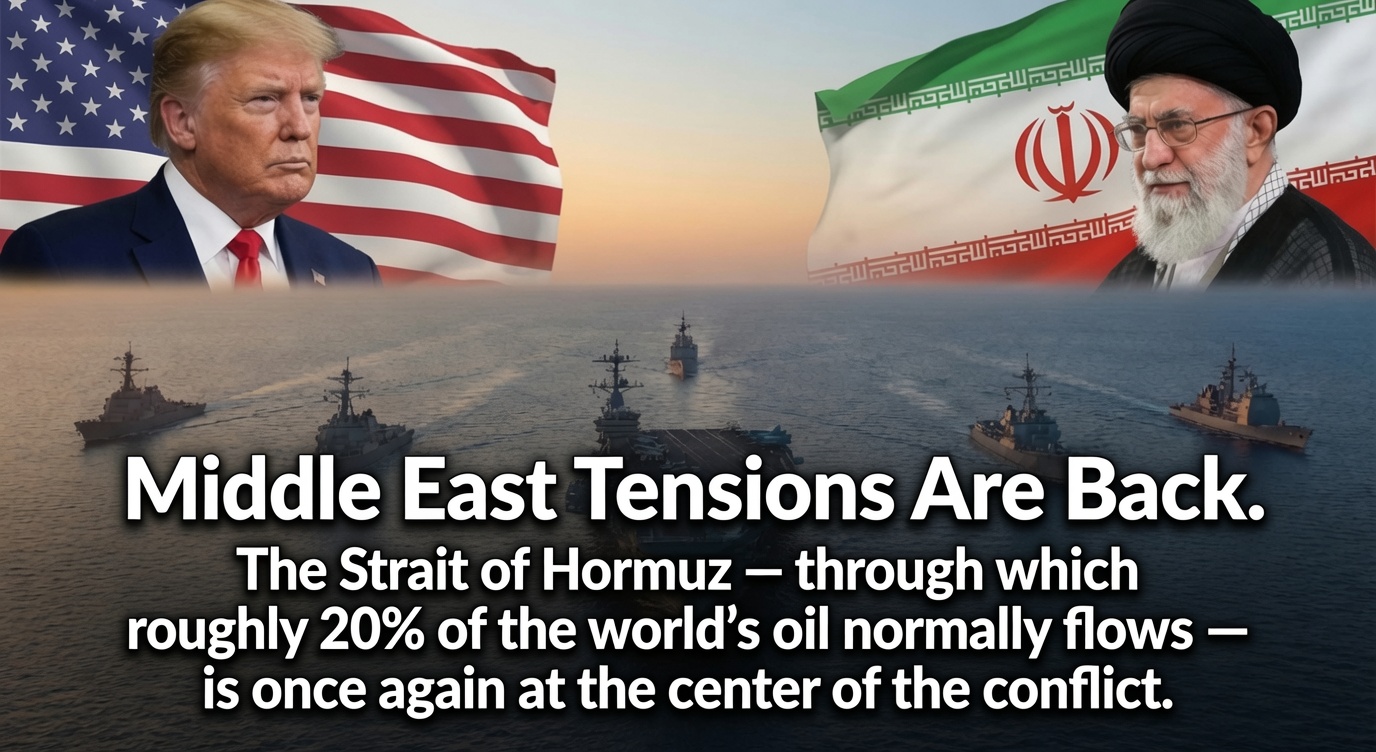
Middle East Tensions Are Back: How Trump’s Actions Are Driving Oil Volatility
The Strait of Hormuz is once again in the spotlight. After a fragile period of relative calm, fresh strikes and conflicting claims over the waterway have pushed Brent crude back above $86 a barrel.
The brief calm in the Middle East is over. On July 14, 2026, President Donald Trump formally notified Congress that U.S. hostilities with Iran resumed on July 7. The notification starts a new 60-day clock under the War Powers Resolution, allowing the administration to continue military operations without immediate new congressional approval.
This is not a minor procedural step. It confirms what markets had already begun pricing in: the fragile ceasefire that held for several weeks has collapsed, and the risk of further escalation is real.

What Triggered the Latest Escalation
The latest round began with Iranian attacks on commercial shipping near the Strait of Hormuz, followed by ballistic missile strikes by Iran’s Islamic Revolutionary Guard Corps on U.S. bases in Jordan and Bahrain. Those missiles were intercepted and caused no casualties, but the response from Washington was swift.
Trump declared the previous ceasefire “OVER” in clear terms. He has demanded that Iran publicly commit to stopping all attacks on ships in the Strait of Hormuz and guarantee that the waterway remains fully open with no tolls or restrictions. At the same time, U.S. forces have adjusted their posture, including suspending the withdrawal of aerial refueling aircraft from Israel.
These moves signal that the White House is prepared to maintain pressure rather than return to the earlier de-escalation path.
Trump’s Approach to the Strait of Hormuz
Throughout 2026, Trump has treated the Strait of Hormuz as both a strategic and political priority. He has repeatedly stated that the United States will not accept Iranian control or interference over the waterway, through which roughly 20% of the world’s oil normally flows.
He has gone further in the past, floating the idea of the U.S. taking operational control of the Strait and even imposing its own fees (what he once called a “Guardian Angel” system). While those more extreme proposals have not been implemented, the underlying message remains consistent: any attempt by Iran to close or disrupt the Strait will be met with force.
The current War Powers notification reinforces that posture. By formally restarting the clock on military operations, Trump has kept the option of further strikes on the table while continuing to demand that Iran back down on shipping threats.
How Markets Are Reacting
Oil markets have responded quickly. Brent crude has climbed back above $86 a barrel as traders reassess the risk of renewed disruption to Persian Gulf exports. The price action reflects uncertainty more than an actual full closure of the Strait. Tanker traffic continues, but the threat of further attacks or a broader military response is enough to support higher prices.
This is classic geopolitical risk premium. When the White House and Tehran exchange threats and military actions, oil traders add a buffer for potential supply interruptions. That buffer is now back in the market after weeks of relative calm following the earlier ceasefire.
Volatility has increased not only in crude but also across related assets. Traders are watching every statement from Trump and every Iranian response for signs of whether the situation will stabilize or deteriorate further.
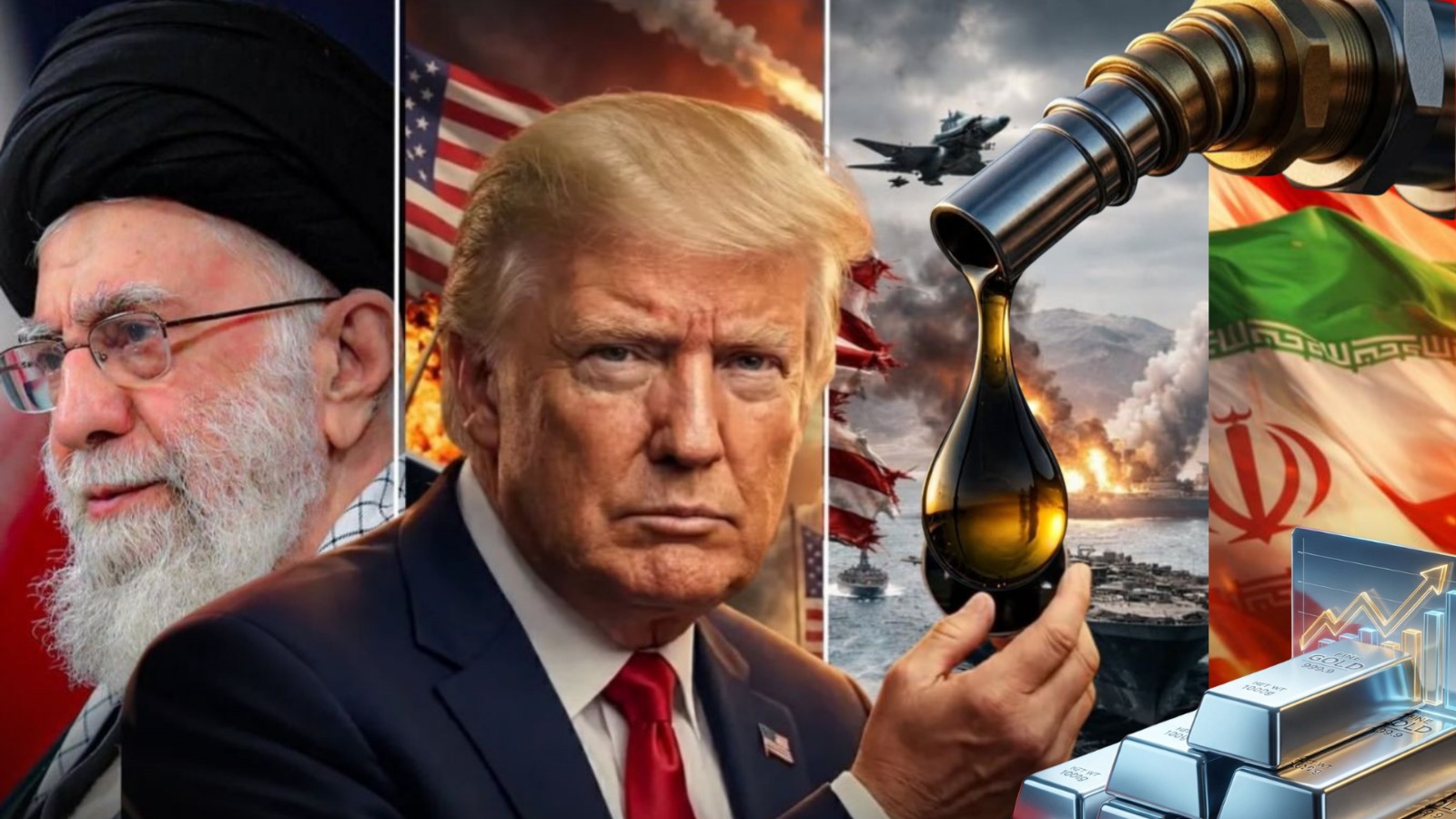
Middle East Tensions Are Back: How Trump’s Actions Are Driving Oil Volatility
The Bigger Picture
What makes the current moment significant is the combination of military escalation and political clarity from the U.S. side. Trump is not signaling a desire for prolonged war, but he is also not offering Iran an easy off-ramp. By notifying Congress and publicly declaring the ceasefire over, he has removed ambiguity.
For oil markets, ambiguity is often more dangerous than clarity. Right now, the market knows the ceasefire is finished and that the U.S. is prepared to act. What it does not yet know is how far either side is willing to go in the coming weeks.
That uncertainty is the primary driver of the latest rise in oil volatility.
What Comes Next
The next phase will likely be defined by two things: Iran’s response to Trump’s demands on shipping, and whether the United States follows the War Powers notification with further military action. Any major strike on Iranian targets or a sustained disruption to tanker traffic would likely push oil prices significantly higher. A de-escalation or renewed talks could reverse the recent gains just as quickly.
For now, the message from Washington is clear. The pause is over. Middle East tensions are back, and oil markets are once again pricing in the risk that comes with them. join ANC Trading community
Read ArticleNATO Summit Ankara 2026: Impact on Oil, Gold Prices & European Defense Spending
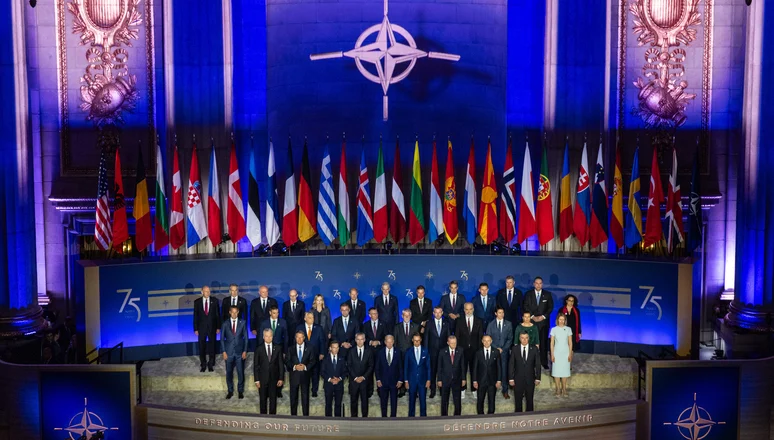
NATO leaders gather in Ankara, Turkey, on July 7–8, 2026, for one of the alliance’s most sensitive summits in recent years. The meeting takes place at a moment of open friction with Washington. President Donald Trump has called the current level of U.S. support for NATO “ridiculous” and described the relationship as unbalanced. Given this stance, expectations are rising that the European continent will have to assume greater responsibility for its own defense.
In this environment of heightened geopolitical risk and market volatility, many investors are increasingly turning to AncFX copy trading to follow disciplined, risk-managed strategies without having to manage every position themselves.
The issue is no longer merely theoretical and is already producing concrete political consequences. In the United Kingdom, divergences and pressure around the military budget added to a broader political crisis, which led Prime Minister Keir Starmer to announce his departure from office. A new leadership transition is now underway, adding another layer of uncertainty for markets.
Educational platforms such as the ANC Trading Community are playing an important role in helping traders and investors better understand the bigger picture behind these geopolitical shifts and their potential effects on currencies, commodities, and interest rates.
The Core Agenda in Ankara
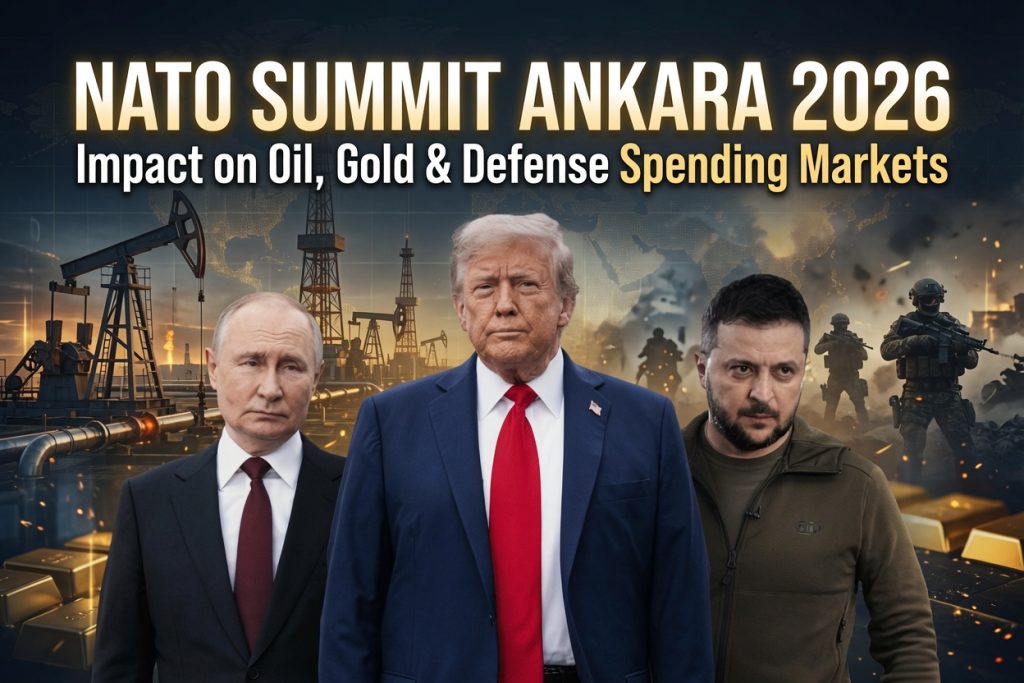
NATO Summit Ankara 2026: Impact on Oil, Gold & Defense Spending Markets.
The summit’s main priorities include accelerating defense spending and industrial production across the alliance, delivering on commitments made at previous summits (particularly regarding Ukraine), and addressing capability gaps exposed by recent conflicts.
European allies have already signaled willingness to move toward much higher spending targets. Several countries are preparing frameworks that could see defense and related security spending approach 5% of GDP by 2035. This represents a historic shift from the long-standing 2% guideline and will have long-term implications for European fiscal policy and inflation dynamics.
The Shadow of the Israel-Iran War
The summit takes place just months after the most serious direct confrontation between Israel, the United States, and Iran in decades. The war that began on February 28, 2026, saw U.S. and Israeli strikes that killed Supreme Leader Ali Khamenei and targeted Iran’s military and nuclear infrastructure. Iran responded with missile and drone attacks across the region, including threats to close the Strait of Hormuz.
Although a ceasefire was reached in April, the conflict left deep scars on global energy markets and regional stability. Ongoing tensions continue to influence oil price movements and safe-haven demand for gold.
Start trading with a multi regulated broker UEXO
Oil Prices: From Spike to Stabilization — With Risks Remaining
The 2026 Iran war caused one of the sharpest oil price surges in recent history. Brent crude briefly exceeded $120 per barrel in March. As of early July 2026, Brent has fallen back to the $71–72 per barrel range. The decline reflects the ceasefire and higher supply responses. However, the market remains sensitive to any renewed escalation in the Middle East.
Gold as a Safe Haven
Gold prices have been extraordinarily volatile in 2026. They surged above $5,400 per ounce earlier in the year amid war fears before correcting. As of early July, spot gold trades around the $4,150–4,200 level. Geopolitical uncertainty from both the Middle East and transatlantic tensions continues to provide underlying support, even as higher-for-longer interest rate expectations exert pressure.
Interest Rates and the Fiscal Cost of Rearmament
Higher structural defense spending across Europe could prove mildly inflationary over the medium term. This may limit how aggressively central banks like the ECB can cut rates. Markets will closely watch whether the Ankara summit produces credible, time-bound spending plans that could influence fiscal trajectories and borrowing costs in the coming years.
What Investors Should Watch Next
In the days and weeks following the summit, markets will focus on specific defense spending commitments from major European economies, any new statements on transatlantic burden-sharing, and fresh developments in the Middle East. Defense and aerospace stocks, along with commodities, are likely to remain sensitive to the outcome. master smart trading strategies for 2026
Join AncFX today and gain access to professional copy trading strategies designed for volatile geopolitical environments. Follow experienced leaders like ABT Trader and build a more disciplined approach to navigating complex global markets.
Visit AncFX now to explore copy trading opportunities and stay ahead of the curve.
Read ArticleBest Forex Trading Strategies That Actually Work in 2026
The forex market has changed significantly over the past few years. In 2026, retail traders face a more complex environment shaped by algorithmic trading, institutional order flow, and faster price reactions. Many strategies that worked well five or ten years ago no longer deliver consistent results.
Traders who continue relying on outdated methods often experience inconsistent performance and unnecessary losses. On the other hand, those who adapt their approach to current market realities tend to achieve better and more sustainable outcomes.
In this article, we explore the best forex trading strategies that actually work in 2026, focusing on what experienced traders are using to stay profitable in today’s market conditions. Start Copy Trading with AncFX
AncFX
Why Many Forex Strategies No Longer Work Well
Before looking at what works, it is important to understand why many traders struggle. The biggest reasons include over-reliance on lagging indicators, ignoring higher-timeframe market structure, poor risk management, and taking low-quality setups without proper confluence.
In 2026, the market rewards traders who understand how price moves and who can align their trades with institutional behavior rather than fighting against it. This shift has made certain strategies more effective than others.
1. Smart Money Concepts (SMC) Trading
Smart Money Concepts, also known as ICT trading, continues to be one of the most powerful frameworks available to retail traders in 2026. This approach focuses on understanding how large institutions and banks move the market.
Key concepts include Order Blocks, Fair Value Gaps, liquidity grabs, and inducement. These tools help traders identify where smart money is likely to enter or exit positions. By studying how price reacts at these key levels, traders can position themselves alongside institutional flow rather than against it.
This strategy works particularly well on the 15-minute and 1-hour timeframes for entries, while using the 4-hour and daily charts to determine overall direction.
2. Price Action and Market Structure Trading
Pure price action trading combined with market structure analysis remains highly effective in 2026. This strategy involves reading raw price movement without depending heavily on technical indicators.
Traders focus on identifying Break of Structure (BOS), Change of Character (CHOCH), and key support and resistance zones. When these elements are combined with candlestick confirmation at important levels, they create high-probability trading opportunities.
The strength of this approach lies in its simplicity and its ability to adapt to both trending and ranging market conditions.
3. Trend Following with Multiple Confluence Factors
Trend following continues to be a reliable strategy, especially when traders add layers of confluence before entering trades. Instead of jumping into every trend, successful traders wait for pullbacks to key levels such as Order Blocks or Fair Value Gaps, then look for confirmation through candlestick patterns or market structure.
This method works particularly well on major currency pairs like EUR/USD, GBP/USD, and USD/JPY during strong trending periods. Gold (XAU/USD) also offers excellent opportunities for trend-following traders.
4. Multi-Timeframe Analysis
One of the most consistent ways to improve trading results in 2026 is through proper multi-timeframe analysis. This involves analyzing the market across different timeframes to ensure alignment.
Traders typically use the daily chart to determine the overall bias, the 4-hour chart to identify key levels, and the 15-minute or 5-minute chart to time precise entries. This approach helps traders avoid fighting the bigger picture while still securing favorable entry prices.
5. Combining Human Judgment with AI Tools
Artificial intelligence has become increasingly present in trading. However, the traders who succeed are not those who blindly follow AI signals. Instead, they use AI tools to scan markets, analyze sentiment, and backtest ideas, while maintaining full control over their decisions and risk management.
This hybrid approach allows traders to process large amounts of information quickly while still applying human discretion where it matters most. Start Trading UEXO fast growing innovative broker
6. Risk Management as a Complete Strategy
In 2026, the most consistent traders treat risk management as their primary strategy rather than an afterthought. This includes risking only a small percentage of capital on each trade, maintaining a favorable risk-to-reward ratio, and keeping detailed trading records.
Traders who master risk management can remain profitable even during periods when their win rate drops. This discipline separates consistent performers from those who experience large drawdowns.
How to Choose the Right Strategy for You
Not every strategy suits every trader. Your choice should depend on your personality, available time, and experience level. Day traders may prefer price action combined with Smart Money Concepts, while swing traders often perform better with trend following and multi-timeframe analysis.
Position traders tend to focus more on higher-timeframe structure and fundamental drivers. The key is to select an approach that matches your lifestyle and allows you to remain disciplined over the long term.
Common Mistakes Traders Make in 2026
Many traders fail not because their strategy is bad, but because they make avoidable mistakes. These include overtrading, moving stop losses further away from entry, ignoring higher-timeframe bias, and risking too much capital on individual trades.
Another common issue is copying strategies without truly understanding the logic behind them. Sustainable success comes from deeply understanding why a strategy works, not just following rules mechanically.
The forex market in 2026 rewards traders who combine structure, patience, and proper risk management. Whether you choose Smart Money Concepts, Price Action trading, Trend Following, or a hybrid approach, the foundation of success remains the same: having a clear plan, managing risk effectively, and staying disciplined.
At ANC Trading Community, we believe that education should be practical and focused on real market behavior rather than hype. Our goal is to help traders develop the skills and mindset needed to navigate the markets with confidence and consistency.
If you are serious about improving your trading and want to learn alongside other dedicated traders, we invite you to join the ANC Trading Community. Here, you will gain access to structured learning, market analysis, and a supportive network committed to long-term growth in trading.
Success in forex does not come from finding a perfect strategy. It comes from mastering the right approach and executing it with discipline over time.
Read ArticleInstant Funding Prop Firms 2026: The Fastest-Growing Model That’s Reshaping How Traders Access Capital
In 2026, the proprietary trading industry is witnessing a clear shift. While traditional 1-step and 2-step challenges remain the most widely used models by volume, instant funding (also called no-challenge or direct-to-funded accounts) has become the fastest-growing product category.
Traders no longer want to spend weeks or months proving themselves in evaluation phases. They want speed. They want to deposit a fee today and trade meaningful capital tomorrow. Prop firms have responded aggressively many now offer instant funding options alongside or instead of traditional challenges.
But is this model truly better, or is it simply more expensive with tighter rules? And why are so many firms pushing it so hard?
This article takes a deep, balanced look at instant funding from both the institutional (prop firm) perspective and the trader’s reality, including the problems, the opportunities, and how this model is quietly reshaping the entire industry.
Step up your game with an award-winning broker, UEXO
What Exactly Is Instant Funding?
Instant funding means you pay an upfront fee and receive immediate access to a funded trading account, no profit targets to hit, no multi-week evaluation phases, and often no time limits.
You start trading the firm’s capital right away. Most programs still have strict risk rules (frequently tighter than traditional challenges), and you keep a high percentage of profits (typically 80–100%).
Some firms call these “Lightning Accounts,” “Direct Funded,” or “Instant Accounts.” Others offer hybrid models, a short verification phase or very lenient one-step challenge that feels closer to instant.
The core promise is simple: Time is money. Skip the wait.
Why Instant Funding Is Growing So Fast in 2026
Several powerful forces are driving this growth:
- Trader fatigue with long evaluations and the emotional toll of failing challenges after weeks of work.
- The rise of futures prop trading, where instant funding models have proven especially popular.
- Increasing competition among prop firms, speed has become a major differentiator.
- A new generation of traders who value immediate action over lower entry costs.
Industry observers note that while traditional two-step challenges still dominate in total volume, instant funding has been the fastest-growing segment between 2024 and 2026. Many newer traders are now entering the space directly through instant funding rather than starting with evaluations.
The Institutional View: Why Prop Firms Are Embracing Instant Funding
From the prop firm’s perspective, instant funding makes strong business sense, but it also carries different risks.
Faster Cash Flow Firms collect the full fee upfront instead of spreading revenue across evaluation phases. This improves cash flow and reduces the administrative burden of managing thousands of ongoing challenges.
Lower Operational Complexity Traditional challenges require firms to monitor traders over weeks, handle resets, and manage high volumes of evaluation accounts. Instant funding simplifies operations traders either succeed quickly or fail fast.
Competitive Advantage In a crowded market, “Get funded today” is a powerful marketing message. It attracts impatient or experienced traders who are willing to pay more for speed.
Different Risk Profile Here’s the trade-off: Without an evaluation filter, firms take on higher risk from day one. This is why most instant funding accounts come with stricter drawdown rules (often 3% daily and 5–6% maximum, frequently trailing). The firm is essentially saying: “We trust you enough to give you capital immediately, but we’ll protect ourselves with tighter guardrails.”
Some firms use instant funding as a premium product while keeping traditional challenges as the volume play. Others are shifting more resources toward instant models because they convert faster and appeal to higher-quality traders who already have proven strategies.
The Trader’s Perspective: Speed vs. Reality
For traders, instant funding feels liberating until the rules hit.
The Clear Advantages
- You start trading real capital immediately.
- No evaluation stress or fear of “wasting” weeks.
- Faster path to first payout (some programs allow payouts within days or on-demand).
- Ideal for traders with consistent, tested strategies who don’t need external deadlines.
The Hidden Costs and Pressures
- Higher upfront fees, Often 5–15% of the funded amount (compared to 1–2% for traditional challenges). A $100K instant account can cost significantly more than a challenge path to the same size.
- Tighter risk rules, Many programs use trailing drawdowns and lower daily limits. One bad day or a string of small losses can end the account quickly.
- Less forgiveness, There’s no “practice phase.” Your first trade is under live funded conditions.
- Psychological pressure, Some traders report feeling more stressed because they’ve paid more and have less room for error.
Who Thrives on Instant Funding? Experienced traders with strong risk management, proven edge, and emotional discipline. Traders who already treat trading like a business and don’t need the structure of an evaluation.
Who Struggles? Newer traders or those still refining their strategy. The tighter rules and higher cost can lead to faster account blow-ups and bigger financial losses on fees.
Current Problems and Criticisms of the Instant Funding Model
Despite its popularity, instant funding faces real challenges: Read more about SpaceX IPO
- “Pay More to Risk More” Perception Many traders feel the model is designed to extract higher fees while offering less protection through evaluation filtering.
- Stricter Rules = Higher Failure Rate Without a warm-up period, some traders blow accounts faster than they would in a traditional challenge.
- Transparency Issues Not all firms clearly disclose how much stricter the rules are or what happens in edge cases (news trading, holding over weekends, etc.).
- Payout Reliability Concerns Because firms take on more immediate risk, some traders worry about payout friction if many accounts perform well at once.
- Regulatory Gray Areas As the model grows, especially in futures, regulators are watching more closely. Firms operating in gray areas may face future restrictions.
The most common complaint from traders in 2026 is simple: “I paid more and got less breathing room.”
How Instant Funding Is Reshaping the Entire Prop Trading Landscape
Instant funding isn’t replacing traditional challenges, it’s forcing the industry to evolve:
- Hybrid models are becoming common (short verification + instant elements).
- Traditional firms are improving their evaluation experiences to compete on speed and fairness.
- Trader education is shifting, more emphasis on risk management from day one rather than “how to pass a challenge.”
- The best firms are getting better at balancing speed with sustainable risk parameters.
In many ways, instant funding is accelerating the professionalization of prop trading. It rewards traders who already have an edge and punishes those who are still learning through expensive mistakes.
How to Choose the Right Instant Funding Prop Firm in 2026
If you’re considering instant funding, evaluate these factors carefully:
- Drawdown rules: Static vs trailing, daily vs overall limits
- Profit split and scaling potential
- Payout speed and proof (real trader testimonials matter)
- Platform quality and available instruments (especially important for forex traders)
- Reputation and transparency: Read recent payout proofs and rule clarity
- Cost vs capital: Calculate true cost-per-funded-dollar
- Support and community: Especially valuable when rules are strict
Is Instant Funding the Future?
Instant funding is not just a trend it’s a structural shift in how prop firms acquire and monetize traders. It rewards speed and proven skill while exposing weaknesses faster than traditional models.
For the right trader , someone disciplined, experienced, and ready to trade seriously, it can be the fastest path to meaningful capital and payouts.
For others, the traditional challenge route (or a hybrid) may still offer better value and a safer learning curve.
The firms that will win in the long run are those that offer both options transparently and build genuine trust through consistent payouts and fair rules, not just marketing speed.
Read Article
SpaceX Blasts Off in Record IPO: Shares Hit $176.52 Intraday, Elon Musk Becomes World’s First Trillionaire
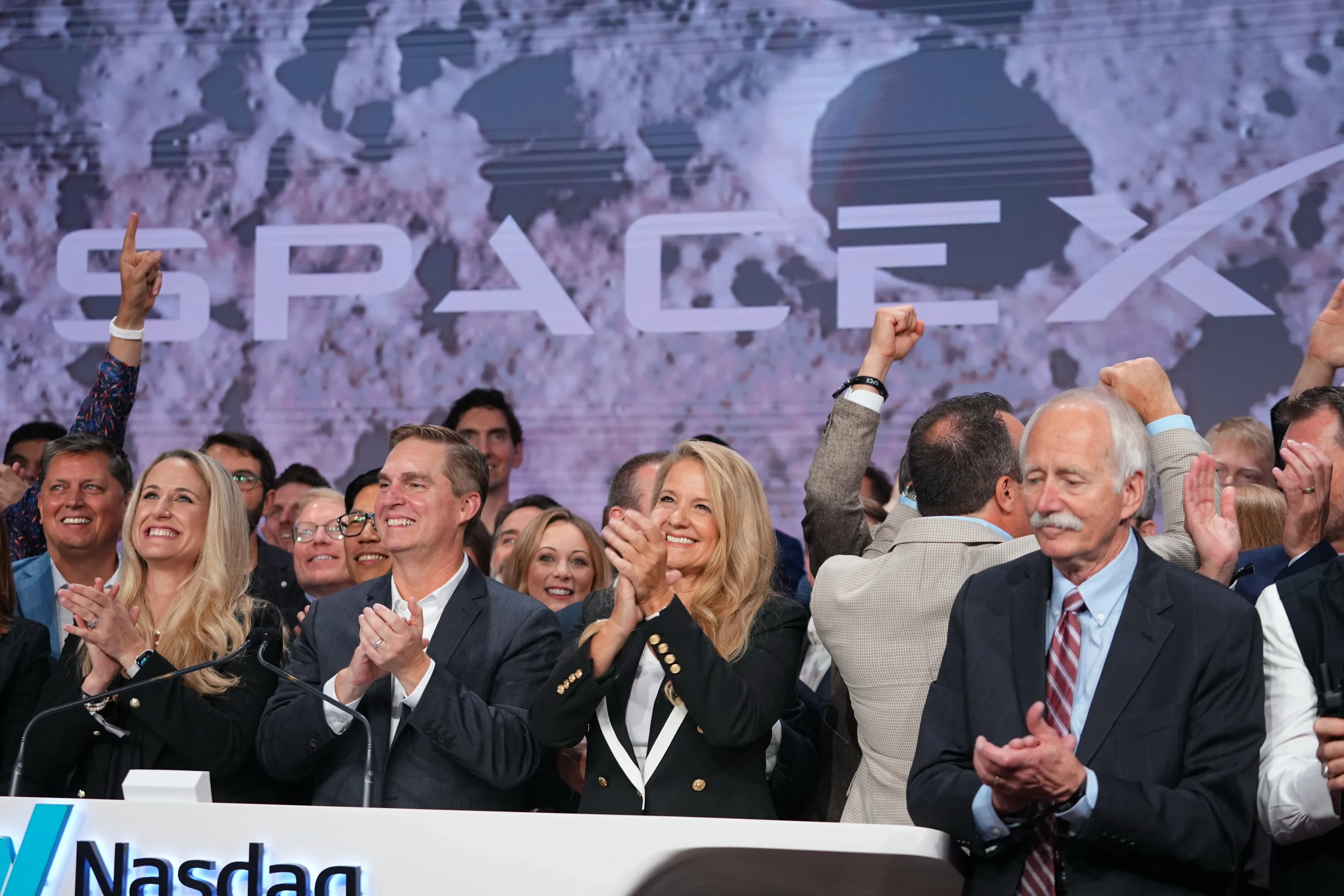
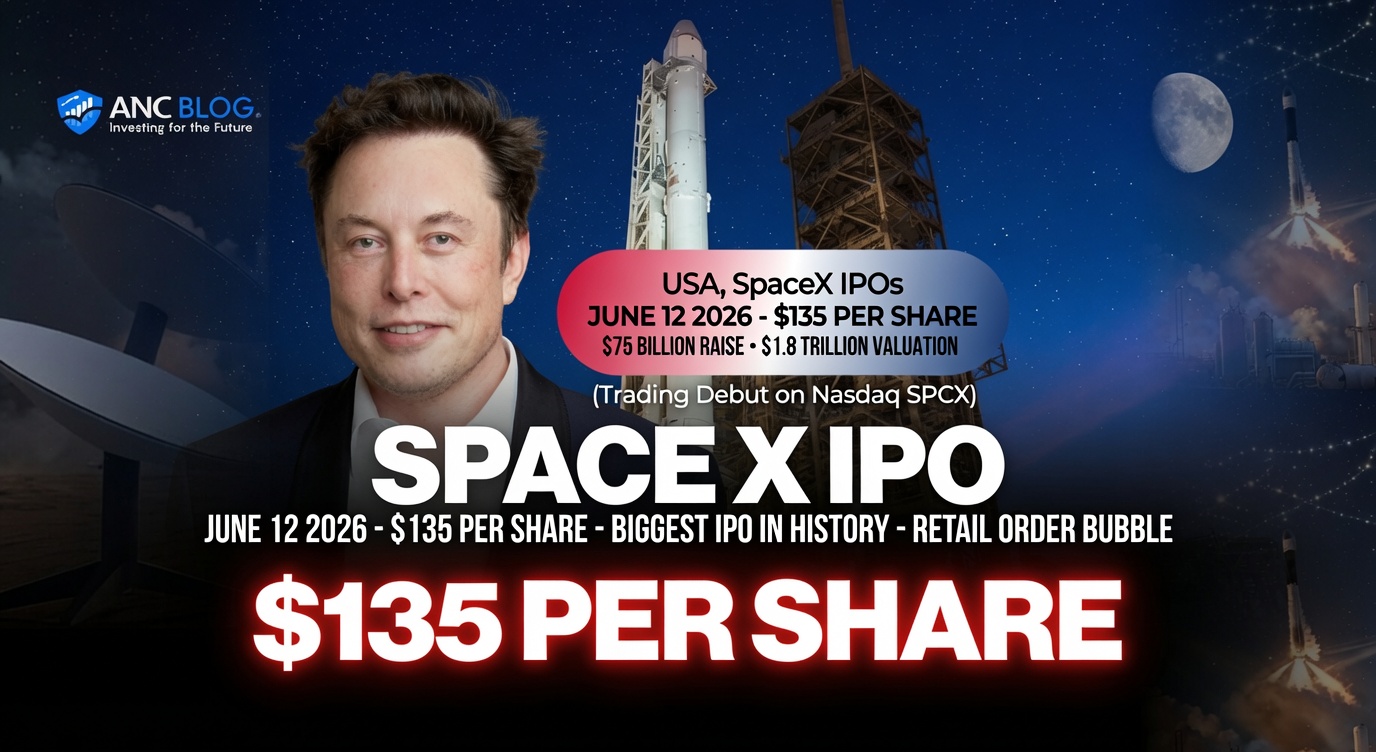
On Friday, June 12, 2026, SpaceX (Nasdaq: SPCX) made history with the largest IPO ever. Priced at $135 per share, the offering raised a record $75 billion. The stock opened around $150, surged to an intraday high of $176.52 (nearly +30.8% from the IPO price), and closed at $160.95, up approximately 19% on the day.
The debut instantly valued SpaceX above $2.1 trillion, making it one of the world’s most valuable public companies and propelling Elon Musk to become the first person in history with a net worth exceeding $1 trillion.
A Market Moment That Moves Everything
This wasn’t just another listing — it was a powerful signal of capital flowing into ambitious, technology-driven growth stories (space infrastructure, Starlink connectivity, and even future orbital AI data centers).
Global risk sentiment lifted. Major U.S. indices closed higher, with noticeable strength in tech and semiconductor names. Tesla shares also edged up modestly (benefiting from its own stake in SpaceX), while some smaller space-related names saw profit-taking or rotation as capital concentrated around the clear sector leader.
For FX and broader market traders, these events matter. Big tech/IPO pops often strengthen risk-on flows, influence USD pairs, commodity currencies, and volatility across emerging markets, exactly the kind of interconnected moves our community watches closely.
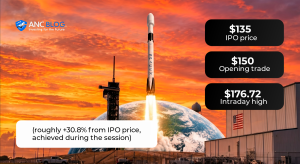
SpaceX Blasts Off in Record IPO: Shares Hit $176.52 Intraday
Events like the SpaceX IPO remind us why structural education and fast, reliable execution are non-negotiable.
At ANC Trading Community, we’ve always said the new phase of FX and global trading belongs to those who combine deep market understanding with the right technology, network, and execution partners. This IPO is a perfect example: it creates volatility, sentiment shifts, and opportunities across asset classes that informed traders can navigate, if they have the right preparation and tools.
That’s why we built ANC as A PLATFORM FOR ALL , connecting education, real-time information, technology, and our trusted broker partners. Our partners are selected to give ANC members competitive conditions, robust platforms, and the support traders deserve when trading FX, indices, commodities, or accessing global equity opportunities (including CFDs on high-profile names like SPCX where available).
How Traders Can Use This Moment
- Stay ahead of sentiment: Big IPOs and tech surges often precede shifts in risk appetite that flow into FX pairs, gold, and oil. Our community analysis and education help you connect the dots faster.
- Execute with confidence: Through our broker partners you get the spreads, execution speed, and leverage tools needed to act on these moves without friction.
- Build long-term edge: Our trading and research desk at ANC doesn’t just react to headlines, we give you the structural framework (education + network + technology) so you can anticipate and prepare for the next wave, whether it’s space stocks, AI infrastructure, or the next macro catalyst.
-
Elon Musk could become world’s first trillionaire with SpaceX’s IPO
SpaceX’s record debut shows that markets reward vision and execution at scale. The same principle applies to African traders.
By staying plugged into ANC Trading Community and trading through our vetted broker partners, you position yourself to understand these global shifts, and actually trade them with professional-grade tools and support.
This is the new phase of trading in Africa: informed, connected, and properly equipped.
Ready to level up your trading?
Join ANC Trading Community today and get direct access to our educational resources, market breakdowns, and introductions to our trusted broker partners who are aligned with serious traders.
Trade smart. Stay connected.
Read Article